Easy access savings accounts pays you interest while giving you access to your savings when you need it. This is the gold standard for an emergency fund.
Affiliate Disclosure: We may receive a fee or commission if you click our links below. Unlike other sites, this does not influence our Top 10 results, costs you nothing and helps keep our content free.
Rates updated hourly*
Top 10 Easy Access Savings Rates :
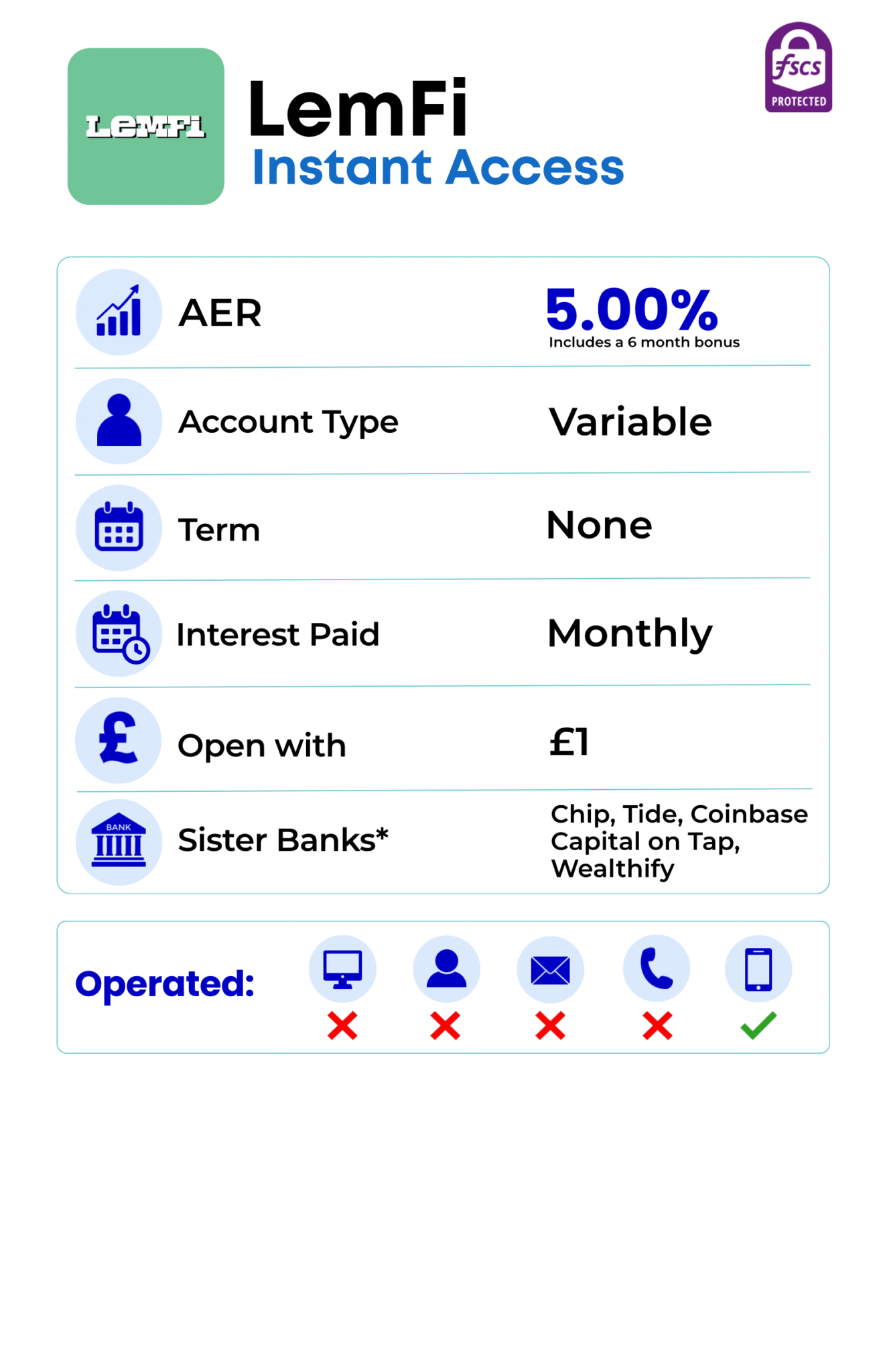
Product Specification
- AER: 5.00%
- Bonus: 1.89% for 6 months
- Gross: 4.79% at £1
- Withdrawals: Unlimited
- Interest Paid: Monthly
- Interest: Paid or Compounded
- Min amount: £1
- Max amount: £250,000*
- Min age: 18
- Joint account: No
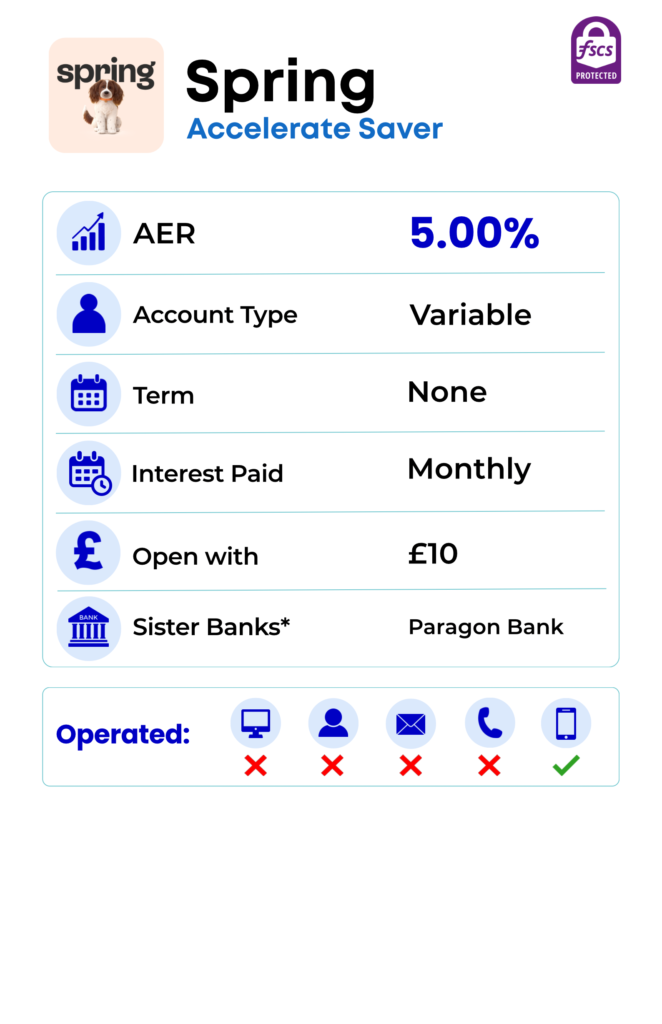
Product Specification
- AER: 5.00%
- Bonus: 1.89% for 6 months
- Gross: 4.79% at £1
- Withdrawals: Unlimited
- Interest Paid: Monthly
- Interest: Paid or Compounded
- Min amount: £1
- Max amount: £250,000*
- Min age: 18
- Joint account: No
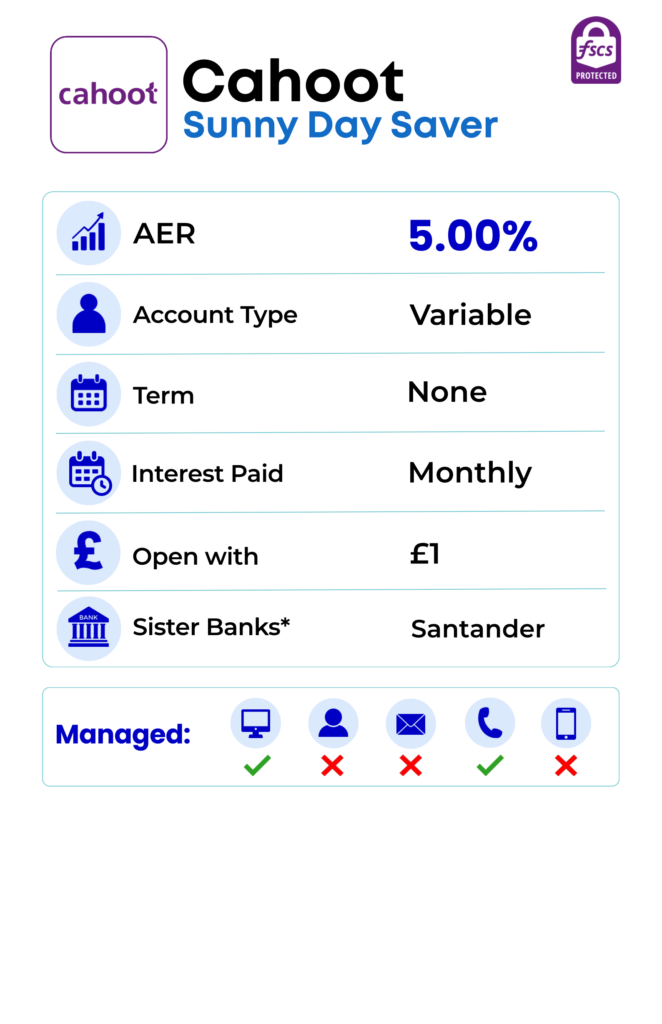
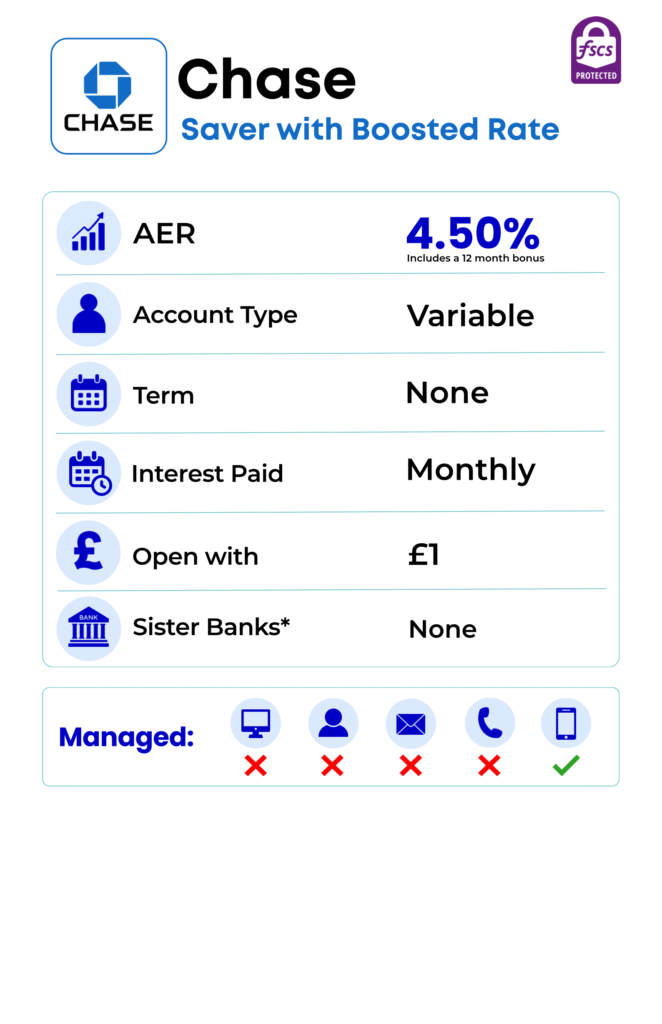
Types of Easy Access Savings Accounts
Easy access savings accounts are great if you need quick access to your cash, but there are a few different types and they work in different ways. The one you need depends on how often you need access to your money.
Four Types of Easy Access Accounts:
Standard Accounts: These give you total access. You can withdraw as much of your money and as often as you want without losing any interest.
Restricted Accounts: These pay slightly higher interest rates than standard accounts, but limit you to a maximum amount of withdrawals per year.
Linked Accounts: These accounts are offered to existing customers. They pay higher rates because the customer already banks with them.
Cash ISAs: These are tax free accounts. All interest earned is entirely yours with no tax to pay. The top Cash ISA rates in the UK can be found HERE.
We appreciate that your time is just as valuable as your money, so we have listed the most frequently asked questions about easy access accounts below. We have answered these in a simple and concise manner so you can start saving in complete confidence.
- What exactly is an easy access savings account and how does it work?
- What is the difference between an easy access account and a fixed-rate bond?
- Are there any hidden limits on how often I can withdraw my money?
- How is interest calculated and when is it paid into my account?
- Do I have to pay tax on the interest I earn in an easy access account?
- What is an introductory bonus rate and how does the trap work?
- Are easy access savings accounts safe if my bank goes bust?
- What is the difference between an easy access account and a cash ISA?
- Can a bank change my easy access interest rate without telling me?
- Why does my current bank pay a much lower interest rate than other providers?
- Is there a minimum deposit requirement to open an easy access account?
- How fast can I actually get my money out in an emergency?
- What is the difference between an AER and a Gross interest rate?
- Can I set up regular automatic payments into an easy access account?
- How do I find and open the absolute best easy access savings account?
What is an easy access savings account ?
An easy access savings accounts is a bank account that pays you interest but you always have access to your money. Unlike other accounts, such as fixed accounts, which locks your money away for a set period of time, easy access accounts let you withdrawal it whenever you need it.
What is an easy access savings account and how does it work?
- The Deposit: You can add money to the account whenever you like. This can be done via a one-off lump sum, regular monthly transfers, or casual spare change.
- The Interest: The bank pays you a percentage of your balance as a reward. This rate is almost always “variable,” meaning the bank can change it over time.
- The Withdrawal: If your car breaks down, your boiler leaks, or you simply spot a holiday you want to book, you can log into your banking app and transfer your cash back to your current account immediately.
Imagine you deposit £5,000 into a top-paying easy access savings account. Your money sits there safely, accumulating interest every day. Six months later, your washing machine stops working and you need £500 for a replacement.
What is the difference between an easy access account and a fixed-rate bond?
Are there any hidden limits on how often I can withdraw my money?
- True Unlimited Access: These accounts operate exactly as the name suggests. You can make fifty withdrawals a month if you want to, and the bank will never penalise you or alter your interest rate.
- Restricted Easy Access: To grab a spot at the top of the comparison charts, some banks offer a very high interest rate but place a strict cap on your annual withdrawals. For example, the terms might state you are only allowed to withdraw money three times a year.
- The Withdrawal Penalty: If you make a fourth withdrawal from a restricted account, the bank will not block the transfer. Instead, they will punish you by drastically cutting your interest rate for the rest of the year, often dropping it down to a near-zero rate.
How is interest calculated and when is it paid into my account?
- Daily Calculation: Every single night, the bank’s computers look at the exact amount of money sitting in your account at midnight. They apply a tiny fraction of your annual interest rate to that specific balance. This means that if you have £10,000 in your account for the first half of the month, and drop it down to £2,000 for the second half, you are paid accurately for the exact days the larger sum was present.
- The Payment Date: While the interest is worked out every night, it is only swept into your balance at set times. Depending on the specific account you choose, this payout happens either once a month or once a year.
Do I have to pay tax on the interest I earn in an easy access account?
- Basic Rate Taxpayers (20% Tax Bracket): You can earn up to £1,000 in total savings interest across all your bank accounts every single tax year completely tax-free.
- Higher Rate Taxpayers (40% Tax Bracket): Your tax-free limit is halved. You can earn up to £500 in savings interest per tax year without paying any tax.
- Additional Rate Taxpayers (45% Tax Bracket): You do not receive a Personal Savings Allowance at all. Every penny of interest you earn on your savings is subject to tax at your highest rate.
What is an introductory bonus rate and how does the trap work?
- How it Works: A bank might advertise an easy access account at a fantastic rate of 5.00% AER. However, when you read the details, you find that this includes a “fixed introductory bonus of 1.50% for the first 12 months.” The underlying true variable rate of the account is actually only 3.50%.
- The 12-Month Cliff: For the first year, you get the full 5.00% return. But the exact day you hit your one-year anniversary, the 1.50% bonus vanishes automatically. Your savings rate instantly plummets to the basic 3.50% rate.
The Action Plan:
Banks rely on human laziness. They know that most people will forget about the bonus expiry and leave their cash sitting in the downgraded account for years. To avoid this trap, you must treat easy access savings as an active product. Set a calendar reminder for 11 months after opening the account, check the market, and move your money to a new top-paying provider the moment your bonus disappears.
Are easy access savings accounts safe if my bank goes bust?
- The Safety Limit: If your bank, building society, or credit union collapses into bankruptcy, the FSCS guarantees to fully reimburse your losses up to a maximum of £120,000 per person.
- Joint Accounts: If you hold an easy access account jointly with a spouse or partner, the protection level automatically doubles, covering your combined savings up to £240,000 within that single institution.
- The Banking Licence Catch: You must look out for banking groups that share a single legal licence. For example, several different high-street brands might actually be owned by the same massive parent company and operate under one banking licence. If you have £120,000 with one brand and £50,000 with another brand under the same licence, your total protection is capped at £120,000, leaving £50,000 completely unprotected.
What is the difference between an easy access account and a cash ISA?
Why does my current bank pay a much lower interest rate than other providers?
- The High-Street Model: Traditional high-street banks have millions of loyal customers who have stayed with them for decades. They know that the vast majority of people value convenience over profit. They assume you will simply open their internal savings account because it is easy and lets you see all your cash in one app. Because they do not need to fight to keep your money, they offer terrible rates.
- The Online Challenger Model: Newer, digital-only banks and building societies do not have massive networks of physical high-street branches to pay for. To win customers and build their business, they must compete aggressively. They do this by stripping away overhead costs and offering the absolute highest interest rates on the market.
Can a bank change my easy access interest rate without telling me?
- The Notice Rules: The Financial Conduct Authority (FCA) sets strict regulations regarding how banks must communicate rate changes to consumers.
- If the Rate Rises: If the bank is increasing your interest rate, they are allowed to implement the change immediately and notify you via a general announcement or an update on their website, as this change purely benefits you.
- If the Rate Falls: If the bank is cutting your interest rate, they are legally required to give you personal advance notice. This notification must be sent via a direct email, a physical letter, or a secure message inside your banking app. The notice must be sent a set number of days before the cut takes place, giving you ample time to review the change, compare the market, and move your money to a competitor if you are unhappy with the new rate.
Is there a minimum deposit requirement to open an easy access account?
- The £1 Gateway: The vast majority of top-paying easy access accounts on the UK market can be opened with an initial deposit of just £1. Some digital banks even allow you to open an account with a balance of zero, letting you set up the structure before transferring any cash.
- The Premier Exceptions: You will occasionally see specialist or premier easy access accounts that offer a slightly elevated interest rate but require a substantial minimum deposit, such as £10,000, £25,000, or even £50,000. If your balance dips below that strict minimum threshold at any point, the bank will instantly drop your interest rate down to a basic penalty rate.
How fast can I actually get my money out in an emergency?
- Internal Transfers (Instant): If your savings account is with the exact same bank as your everyday current account, transfers are instantaneous. You simply log into your mobile app, move cash from savings to current, and the money is available to spend on your debit card immediately, 24 hours a day, 365 days a year.
- External Transfers (Faster Payments): If you have moved your savings to an independent online specialist bank to secure a higher interest rate, the process involves an extra step. You must request a withdrawal to your “nominated account” (your main high street current account). These transfers are processed via the UK’s Faster Payments network.
- The Timeframe: In most cases, the cash arrives in your current account within a few minutes. However, during peak times or if the bank runs automated security checks, it can occasionally take up to two hours. A tiny number of smaller building societies still use older systems that take one working day to process withdrawals, so always check the transfer speeds if immediate access is vital for your peace of mind.
What is the difference between an AER and a Gross interest rate?
- The Gross Rate: This is the flat, raw annual interest rate that the bank pays you on your balance before any income tax is factored in. It is a basic calculation that does not take into account how often interest is paid out during the year.
- The AER (Annual Equivalent Rate): This is a highly regulated, standardised financial formula. It shows you exactly what your true annual interest return would be if you left your money in the account for a full year, allowed the interest to compound, and had it paid out annually.
Can I set up regular automatic payments into an easy access account?
- Standing Orders: You can easily set up a standing order from your main high street current account to automatically transfer a specific amount of money into your easy access savings account on a set day every month, such as payday.
- Total Freedom: Unlike a regular savings account, which legally forces you to make monthly deposits and punishes you if you miss a payment, an easy access savings account places no obligations on you. If you have a expensive month and need to pause your automatic transfer, you can do so instantly via your banking app without facing any penalties or losing your interest rate.
- Spreading the Wealth: You can also manually add ad-hoc lump sums whenever you receive a birthday gift, a work bonus, or simply have cash left over at the end of the week, making it a highly adaptable home for your money.
How do I find and open the absolute best easy access savings account?
- Ditch High-Street Loyalty: Accept that your main current account provider is highly unlikely to offer a competitive savings rate.
- View the Top rates HERE – these are updated daily to bring you the highest easy access AERs currently available in the UK.
- Check for Restrictions: Look closely at the results. Filter out any accounts that place a strict cap on how many withdrawals you can make per year, unless you are completely certain you won’t need regular access to the cash.
- Gather Your ID: Click through to the winning bank’s website. You will need your address history for the last three years, your National Insurance number, and the sort code and account number of your main UK current account (which will act as your secure nominated account).
- Apply and Verify: Complete the quick online application form. Most modern providers use instant electronic identity checks, meaning your account will be open and ready to fund within a matter of minutes. Transfer your initial deposit across, and start enjoying a significantly higher return on your hard-earned money!
Summary Checklist for Easy Access Savings Accounts
- Ultimate Capital Flexibility: Savers can instantly transfer cash back to their main current account at any time, with no hidden fees or waiting periods during an emergency.
- The Withdrawal Trap: Some top-paying accounts look highly attractive but place a strict annual cap on withdrawals, drastically cutting your interest rate if you exceed the limit.
- Guaranteed Asset Security: Every single penny you deposit with an authorised UK institution is legally protected by the government-backed FSCS safety net up to £120,000 per person.
- Tax-Free Allowance Limits: Interest earned is subject to income tax but remains 100% tax-free until you breach your annual Personal Savings Allowance threshold.
- Introductory Bonus Expiry: Many leading interest rates include a temporary twelve-month bonus, meaning savers must actively switch providers annually to avoid a severe rate drop.
Alternative accounts: If an easy access savings account isn’t right for you, consider these other account types:
Regular savings accounts offer a structured, rewarding way to build your cash. By committing to save a set amount each month, you unlock some of the highest interest rates available. This predictable routine helps you grow your money consistently while protecting it from volatile markets. It is an ideal choice for building an emergency fund. We compare the full market so you always get the best rates available.
Notice savings accounts pay higher interest if you give advance warning before taking your money out. You can pick the timeline that fits your plans, with flexible 30 day or 60 day accounts, medium-term 90 day options, or top-earning 120 day and 180 day periods. It is a great way to grow your money safely without locking it away forever. We scan every option on the market to bring you the best possible returns.
Children’s savings accounts offer boosted interest rates to jumpstart your child’s financial future. You can select the account type that matches your family’s milestones, from flexible instant access accounts to high growth fixed rate bonds. It is a secure was to build a nest egg while teaching your kids lifelong money habits. We scan the entire market to find the highest available rates for your child’s savings.
Monthly Interest Savings Accounts
Monthly interest savings accounts provide a dependable, regular stream of extra income from your cash. Instead of waiting until the end of the year, your interest is paid out every single month. This frequent payout structure makes them an ideal choice for anyone looking to supplement their monthly budget or pension. We compare the complete market to unlock the best rates for your savings.