Saving money for children is a generous, forward-thinking choice for parents or guardians. Whether the goal is funding university, buying a first car, or securing a home deposit, a dedicated account makes a massive difference.
Affiliate Disclosure: We may receive a fee if you click our links or open an account. This does not influence our results, costs you nothing and helps keep our content free.
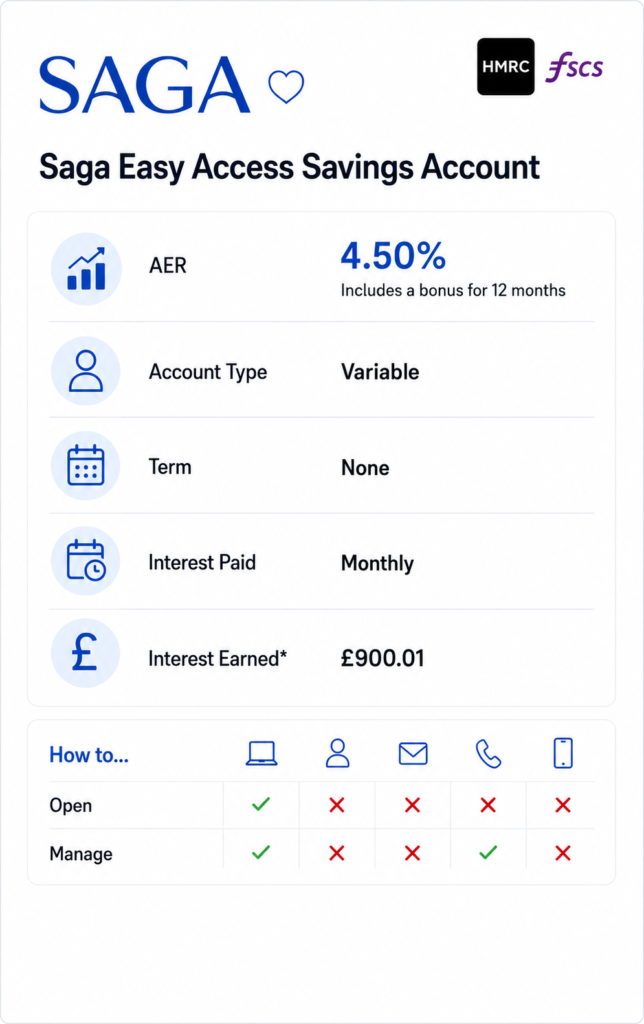
Top Children's Easy Access Savings Accounts
Top Children’s Regular Savings Accounts
Top 1 Year Children’s Savings Bonds
Top 2 Year Children’s Savings Bonds
Top 3 Year Children’s Savings Bonds
Types of Children’s Accounts
A children’s savings account is a bank or building society account designed for children under 18. You can open most accounts with a small deposit of £1. Many of the major UK providers offer instant access savers, regular monthly savings accounts, fixed term bonds and tax free Junior ISAs.
- Easy Access Savers: Good for pocket money and gifts; lets children or parents add and withdraw cash freely.
- Regular Savers: Pay higher interest rates if you deposit a fixed amount every month.
- Savings Bonds: A secure long term investment where cash is locked away for a fixed term.
- Junior ISAs (JISAs): Lock the money away until the child turns 18, offering completely tax-free interest with higher annual allowance caps.
However, the world of banking can feel overwhelming. With so many terms like “interest rates,” “custodial accounts,” “tax rules,” and “compound growth,” it is easy to get confused.
We know that your time is just as valuable as your savings, so we have answered the most frequently asked questions as simple and clear as possible.
Take a look below to find the exact information you need so you can confidently choose the absolute best path for your child’s financial future.
- What is the minimum age to open a children’s savings account?
- Can grandparents open a savings account for a grandchild?
- What documents do I need to open a children’s savings account for a child?
- Can a child open their own bank account?
- Can parents withdraw money from a child’s savings account?
- What happens to a children’s savings account when they turn 18?
- Can you lock a children’s savings account so they can’t spend it at 18?
- How do children’s savings affect college/university student finance?
- Are children’s savings accounts protected if the bank fails?
- Do children pay tax on savings interest?
- What is the £100 tax rule on children’s savings?
- Which bank has the highest interest rate for a child’s account?
- What is the difference between a traditional children’s savings account and a Junior ISA?
- Is it better to save cash or invest in stocks for a child?
- How much can you legally pay into a child’s savings account per year?
What is the minimum age to open a children’s savings account?
The simple answer is day one. You can open a savings account for a baby from the very moment they are born and have a registered birth certificate.
Many major financial institutions offer specific “newborn” or “infant” accounts. These are designed to allow parents, relatives, and family friends to deposit celebratory birth gifts, christening money, or monthly savings right from the start.
- For children under 7 to 11 years old: An adult must open and manage the account on the child’s behalf. The adult is legally responsible for the account, but the money itself belongs entirely to the child.
- For older children (usually aged 7 and above): Some banks offer specialised children’s accounts where the child can have their own cash card. This allows them to practice depositing pocket money or withdrawing small amounts under adult supervision.
Starting a children’s savings account immediately at birth is highly recommended. As explained later in this guide, giving money more time to sit in an account drastically increases how much it will grow over the years.
Can grandparents open a savings account for a grandchild?
Yes, grandparents can absolutely open a children’s savings account for a grandchild, but the specific type of account determines how easy it is to set up.
If you are a grandparent looking to open a traditional, everyday savings account for your grandchild, most local banks and building societies make this very simple. You will typically need to bring:
- The child’s full birth certificate.
- Your own personal identification (like a valid passport or driving licence).
- Proof of your current address (such as a recent utility bill).
The bank will set up the account in the grandchild’s name, with you listed as the managing adult or “trustee”.
However, the rules are stricter for specialized, tax-free accounts like a Junior ISA (JISA) in the UK. By law, only a parent or a legal guardian with direct parental responsibility can open a Junior ISA for a child.
Once the parent has officially opened the Junior ISA, grandparents, aunts, uncles, and friends are completely free to pay money directly into it. If you are a grandparent wishing to use a tax-free wrapper, simply ask the child’s parents to set up the account first and send you the payment details.

What documents do I need to open a children’s savings account for a child?
Banks must follow strict legal checks to prevent financial fraud. Because of this, you cannot simply open an account with a child’s name; you must provide physical or digital proof of identity and address.
While exact requirements vary slightly depending on the financial institution, you will almost always need to present the following accepted documents:
Child’s Identity:
Official Birth Certificate, Valid Passport or Adoption Certificate.
Adult’s Identity:
Valid Photocard Driving Licence, Valid Passport or National Identity Card.
Adult’s Address:
Recent Utility Bill (gas, electricity, water), Council Tax Bill or Recent Bank Statement.
- If you are opening a children’s savings account online, many modern platforms use secure digital verification software. They may ask you to snap a clear photograph of your ID and upload a digital copy of the child’s birth certificate.
- If you visit a physical bank branch, always bring the original documents rather than photocopies, as bank staff are legally required to verify their authenticity.
Can a child open their own bank account?
Yes, but it depends heavily on their age and the type of account they want to open. Children cannot sign legally binding contracts, so banks have strict age thresholds for independent banking.
- Under Age 7: A child cannot open or manage an account on their own. A parent or guardian must do it for them.
- Aged 7 to 11: This is the sweet spot where many banks introduce basic “pocket money” accounts. While a parent still needs to sign the initial paperwork, the child is often given their own cash card or mobile app access to view their balance and make small deposits.
- Aged 11 to 16: Most financial institutions allow teenagers in this age bracket to walk into a branch and open a basic savings or teen current account completely independently. They will need to bring their own form of identification, such as a passport.
- Aged 16 and 17: At this stage, older teenagers are granted near-total independence. They can open standard savings accounts, use debit cards, set up online banking, and even open certain adult accounts like a standard Cash ISA.
Allowing a child to take over their account around age 11 is an excellent way to teach real-world financial responsibility. It shifts saving from an abstract concept into an active, everyday habit.

Can parents withdraw money from a child’s savings account?
This is one of the most critical questions parents ask, and the answer is a strict “it depends on the type of account.”
If you open a standard, traditional children’s savings account, you are typically allowed to withdraw the money. Because you are the managing adult on the account, the bank treats you as the trustee. If there is a family emergency, or if you need to use the money to pay for something that directly benefits the child (such as school uniforms, a new computer, or school trips), you can access the cash.
However, there is a major moral and legal distinction to keep in mind: the money legally belongs to the child. Using a child’s savings account as a personal holding tank for your own spending money is highly discouraged and can cause legal issues if challenged.
If you open a specialised, tax-locked account—such as a Junior ISA (JISA) in the UK—the rules change completely. Once you deposit cash into a Junior ISA, nobody can withdraw it until the child turns 18.
The money is completely locked away. Even if you experience a severe financial crisis or bankruptcy, the bank cannot release those funds to you. The only rare exceptions are in the tragic event of the child’s death or terminal illness.
Always check the fine print: if you think you might need the money back in an emergency, avoid locked accounts and stick to flexible, easy-access children’s savings options.
What happens to a children’s savings account when they turn 18?
Turning 18 is the legal milestone known as the “age of majority.” At this exact moment, the child officially becomes an adult in the eyes of the law, and the financial dynamics of the account shift instantly.
What happens depends on the specific framework of the account:
Traditional Savings Account –► Automatically converts to an adult account.
Junior ISA (JISA) –► Automatically rolls into an Adult ISA.
The 18-year-old gains full withdrawal rights.
For traditional children’s savings accounts, the bank will automatically convert the account into a standard adult savings account. The parent’s name is completely removed from the account records. The 18-year-old is granted 100% control over the funds. They can check the balance, change the passwords, move the money to another bank, or withdraw it all.
For Junior ISAs, the account automatically converts into a standard, adult Cash ISA or Stocks and Shares ISA. The tax-free status remains completely intact, but the strict lock drops away. The young adult can now choose to leave the money alone to keep growing, or they can empty the entire balance into their personal current account.
Banks will typically write to the young adult a few weeks before their 18th birthday to explain how to register for online banking and claim full ownership of their assets.

Can you lock a children’s savings account so they can’t spend it at 18?
Many parents spend years diligently saving tens of thousands of pounds, only to panic at the thought of their 18-year-old spending the entire nest egg on an expensive holiday, a sports car, or nights out. This leads to a common question:
Can I keep it locked?
With standard children’s savings accounts and Junior ISAs, the answer is no. You cannot legally block an 18-year-old from accessing money held in their name. The law states that the money is theirs, and they have an absolute right to do whatever they want with it.
If you want to maintain control over the funds past the age of 18, you have to use alternative financial pathways:
- Save in your own name: You can open a separate savings account or adult ISA within your own personal banking profile and mentally earmark it for your child. Because the account is legally yours, you decide exactly when to gift the money—whether that is at age 21, age 25, or when they graduate from university. The downside is that this money will count toward your personal tax allowances.
- Set up a Bare Trust or Discretionary Trust: A trust is a formal legal arrangement where you appoint “trustees” to manage money for a beneficiary. While a bare trust still gives the child a right to the money at 18, a discretionary trust allows you to set customised rules, dictating that the money can only be released for specific milestones, such as buying a house or paying for higher education.
The best protection against a reckless 18-year-old isn’t a legal lock; it is teaching them healthy money habits throughout their childhood so they treat the fund with respect when they inherit it.

How do children’s savings affect college/university student finance?
In the UK, children’s savings do not reduce or affect government student loans or university financial aid. Standard undergraduate student maintenance loans are calculated based entirely on household income (the parents’ salary and earnings), rather than the personal savings of the student.
However, if the student is applying for specific means-tested hardship funds, university grants, or local government welfare benefits while studying, having a large personal bank balance could disqualify them from receiving extra financial support.
To check eligibility for student finance and extra financial help, please visit Student Finance.
Key Rules for UK Student Finance
The Capital Savings Rule: The raw amount of money sitting in a child’s bank account, Junior ISA (JISA), or Child Trust Fund (CTF) is completely ignored.
The Unearned Income Rule: Any taxable interest or investment dividends generated by those savings are considered ‘unearned income’. If the student has significant unearned income, it is added to the total household income assessment.
Tax Free Savings Exceptions: Interest earned inside a Junior ISA or a Child Trust Fund is completely tax free. Therefore, it does not count as taxable unearned income had has zero impact on financial aid.
Are children’s savings accounts protected if the bank fails?
Yes. Children enjoy the exact same statutory government financial protections as adults.
In the United Kingdom, your money is legally protected by the Financial Services Compensation Scheme (FSCS).
The safety limits are very robust:
- The FSCS guarantees protection for up to £120,000 per person, per authorised bank or building society.
- If a bank goes completely out of business, the government scheme will automatically step in and return the child’s savings up to that £120,000 limit, usually within seven working days.
It is incredibly important to understand the phrase “per authorised financial institution.” Some banks share a single banking licence. For example, if two different brands operate under the exact same parent licence, the £120,000 limit applies to the total combined amount held across both brands.
If your child is incredibly fortunate and has savings approaching or exceeding £120,000, it is highly recommended to split the money across entirely separate financial groups to ensure every single penny remains 100% protected.
Do children pay tax on savings interest?
The short answer is: very rarely, but they can.
There is a widespread myth that children are completely exempt from taxes. In reality, children are legally taxed in the exact same framework as adults. They have a Personal Allowance, which means they can earn a certain amount of total income every year before paying a single penny of income tax.
Additionally, they benefit from a Personal Savings Allowance, which allows them to earn up to £1,000 of pure savings interest entirely tax-free. They also have access to a specialised Starting Rate for Savings, which can shield up to another £5,000 of interest if they have no other regular income.
Because the vast majority of children do not have a full-time job, their total annual income is practically zero. Therefore, they can usually earn thousands of pounds in bank interest each year without triggering any tax obligations.
However, if a child is an actor, a successful model, or runs a profitable online business, their earnings might exhaust their basic Personal Allowance. In those rare scenarios, any extra bank interest they earn could be subject to standard income tax rates.
What is the £100 tax rule on children’s savings?
The £100 rule is an incredibly important tax regulation implemented by HM Revenue and Customs (HMRC)in the United Kingdom. It is specifically designed to stop parents from using their children as a tax shield.
Without this rule, a wealthy parent who has run out of their personal tax allowances might be tempted to move £50,000 into their young child’s bank account simply to avoid paying tax on the interest earned.
To prevent this, the law states that if a child earns more than £100 in total interest during a single tax year from money given directly by a parent or step-parent, the entire interest amount is treated as the parent’s income.
Interest Earned on Cash Given by a Parent
Under £100 ─► Taxed normally (usually 0% under the child’s allowance).
Over £100 ─► The ENTIRE interest amount is shifted to the parent.
Parent pays tax at their personal income tax rate.
Let’s look at a clear math example to see how easily this can happen. Imagine a high-interest children’s account is paying a 5% interest rate.
- If a parent deposits a lump sum of £2,500, that money will generate £125 of interest over a full year.
- Because £125 is over the £100 threshold, the child doesn’t pay tax. Instead, the parent must declare that £125 on their personal tax return and pay tax on it at their regular rate (basic, higher, or additional).
Crucially, this rule does not apply to money given by grandparents, aunts, uncles, or friends. If a grandparent gifts a child a large sum that generates £500 of interest, the £100 rule is not triggered. It only applies to direct parents and step-parents.
To completely bypass this rule legally, parents can save using a official Junior ISA, where all interest is 100% tax-free regardless of who gave the money.
Which bank has the highest interest rate for a child’s account?
Interest rates are highly dynamic and change frequently depending on central bank decisions, market conditions, and competition between financial firms.
As a general rule, banks offer significantly higher interest rates on children’s savings accounts than they do on standard adult accounts. They do this as a loss-leader strategy, hoping that if they attract a family early on, that child will grow up to be a loyal customer for adult current accounts, credit cards, and mortgages. We list the top interest rates currently available here.
When searching for the absolute highest returns, you will typically find two main structures:
- Children’s Regular Savers: These accounts offer the highest headline interest rates (often between 4% and 6%). However, they come with tight rules: you must commit to depositing a fixed amount every single month (e.g., between £10 and £100), and you usually cannot make withdrawals without facing an interest penalty.
- Easy-Access Children’s Savings: These accounts offer slightly lower rates but give you total flexibility. You can deposit a large lump sum all at once and withdraw the money whenever you need it. Often, the top interest rate is capped at a specific balance limit (such as 5% on the first £5,000, dropping down to a much lower rate on any money above that threshold).
The Money Club searches the whole market to show you the best rates available in the UK. Top rates on the market HERE
What is the difference between a traditional children’s savings account and a Junior ISA?
Choosing between these two account frameworks is the most common crossroads parents face. The core differences boil down to taxation, access, and withdrawal limits.
A Traditional Children’s Savings Account is a flexible, everyday bank account. It is easy to open, allows you to put money in or take money out whenever you want, and can be managed easily via an app or branch. The main downside is that the interest earned is subject to standard tax rules, including the strict £100 parent rule discussed earlier.
A Junior ISA (JISA) functions precisely like a specialised custodial account, meaning it must be opened and managed by a parent or guardian, but the money legally belongs entirely to the child. Its defining feature is a legal lock: nobody can touch the money until the child turns 18.
In exchange for locking the cash away, the government grants complete tax immunity. Every single penny of interest, capital gains, or stock market growth earned inside a Junior ISA is 100% tax-free, and it completely bypasses the £100 parental rule.
- Cash Withdrawals: Yes, at any time.
- Tax Protection: No, subject to standard limits and rules.
- Account Opening: Parents, grandparents, or guardians.
- Deposit Limits: Set by the bank’s personal limits.
- Cash Withdrawals: No, locked tightly until age 18.
- Tax Protection: Yes, 100% tax-free growth and interest.
- Account Opening: Parents or legal guardians only.
- Deposit Limits: Strictly capped by government allowances.
Is it better to save cash or invest in stocks for a child?
The answer to this question depends almost entirely on time. Specifically, how many years do you have before the child turns 18?
If you are saving for a teenager who is already 14 or 15 years old, keeping the money in cash is usually the safest option. Because they will need to access the funds in just a few short years to pay for university or a first car, you cannot afford to risk a sudden stock market downturn. Cash savings accounts provide guaranteed stability and steady interest.
However, if you are saving for a baby, toddler, or young child, history shows that investing in stocks and shares is almost always the superior choice. Over a long horizon like 10, 15, or 18 years, cash accounts run a severe risk of losing purchasing power due to inflation.
While the stock market experiences volatile ups and downs in the short term, over long periods it historically outperforms cash by a wide margin.
Many modern providers offer Junior Stocks and Shares ISAs. These accounts allow you to automatically pool the child’s savings into diversified global stock market funds. This spreads your risk across hundreds of the world’s biggest companies, maximising long-term growth potential entirely tax-free.

How much can you legally pay into a child’s savings account per year?
The maximum amount you can deposit depends on the legal tax wrapper surrounding the account.
For a standard, traditional children’s savings account, there is no government-mandated legal limit. You can deposit as much money as you like. However, individual commercial banks will enforce their own maximum balances—often capping the account at £25,000 or £50,000—or they will drastically lower the interest rate once your balance passes a certain threshold.
For a Junior ISA (JISA), the government enforces a very strict annual limit. For the current tax year, the maximum legal contribution limit is £9,000 per child.
This £9,000 allowance is completely independent of the parents’ personal adult ISA limits. You can choose to put the entire £9,000 into a Cash JISA, the full £9,000 into a Stocks and Shares JISA, or split the amount across both types (e.g., £4,500 in cash and £4,500 in stocks).
The allowance resets completely at the start of every new tax year on April 6th. Crucially, ISA allowances do not roll over. If you only save £2,000 this year, you completely lose the remaining £7,000 of tax-free allowance when the new tax year begins.
The Unfair Advantage: How Compound Interest Changes Everything
To fully appreciate the impact of these accounts, you must look at the mathematical engine driving them: compound interest.
Compound interest is often described as “interest on interest.” When you put money in an account, the bank pays you interest. The following year, you earn interest on your original deposit plus the interest you earned the year before. Over 18 years, this snowballs into a massive sum.
Let’s look at a clear mathematical visualisation of this growth. Imagine you deposit £50 every single month from the day your child is born until their 18th birthday. Over 18 years, your actual physical cash contributions total exactly £10,800.
If that money sits under a mattress earning 0% interest, it remains exactly £10,800. But look at what happens if you place that identical £50 a month into accounts with different interest returns:
Total Savings Pot After 18 Years (£50 per month deposit)
0% Interest (Cash under mattress):
▓▓▓▓▓▓▓▓▓▓▓▓▓▓ £10,800
3% Fixed Interest Rate:
▓▓▓▓▓▓▓▓▓▓▓▓▓▓▓▓▓▓ £14,310 [Includes £3,510 free interest]
5% High-Yield Savings / JISA Rate:
▓▓▓▓▓▓▓▓▓▓▓▓▓▓▓▓▓▓▓▓ £17,460 [Includes £6,660 free interest]
7% Average Historical Stock Market Return:
▓▓▓▓▓▓▓▓▓▓▓▓▓▓▓▓▓▓▓▓▓▓ £21,570 [Includes £10,770 free growth]
At a stable 5% interest rate, compound growth hands your child an extra £6,660 of completely free money just for letting the account sit over time. If invested in a diversified stock market index fund averaging a 7% long-term return, the growth almost completely matches your total out-of-pocket contributions.
Summary Checklist for Children’s Savings Accounts:
To take immediate action today, use this rapid decision framework:
- If you need emergency flexibility: Open a traditional children’s savings account with a top-paying building society or bank.
- If you want maximum, tax-free growth and don’t need access: Open a Junior Cash ISA or a Junior Stocks & Shares ISA.
- Watch out for tax rules: If you are a parent putting large sums into a traditional account, make sure the annual interest stays below £100, or move it to a JISA to protect it.
- Automate it: Set up a small, manageable standing order or direct debit right after payday to harness the compounding effect early.
By understanding these fundamentals, you transform saving from a chore into a highly efficient launchpad for the next generation.
Alternative accounts: If a Children’s savings account isn’t right for you, consider these other account types:
Easy-access savings accounts provide a secure, flexible way to earn interest on your cash with total freedom. Since you can withdraw your money instantly without penalties, your funds remain completely available whenever you need them. This flexibility makes them an ideal choice for building an emergency fund or holding short-term cash. We search 100’s of providers to find you the highest interest rates available on the market.
Regular savings accounts offer a structured, rewarding way to build your cash. By committing to save a set amount each month, you unlock some of the highest interest rates available. This predictable routine helps you grow your money consistently while protecting it from volatile markets. It is an ideal choice for building an emergency fund. We compare the full market so you always get the best rates available.
Notice savings accounts pay higher interest if you give advance warning before taking your money out. You can pick the timeline that fits your plans, with flexible 30 day or 60 day accounts, medium-term 90 day options, or top-earning 120 day and 180 day periods. It is a great way to grow your money safely without locking it away forever. We scan every option on the market to bring you the best possible returns.
Monthly Interest Savings Accounts
Monthly interest savings accounts provide a dependable, regular stream of extra income from your cash. Instead of waiting until the end of the year, your interest is paid out every single month. This frequent payout structure makes them an ideal choice for anyone looking to supplement their monthly budget or pension. We compare the complete market to unlock the best rates for your savings.