Fixed-rate bonds secure your lump sum for a specific term, guaranteeing fixed returns at an unchangeable interest rate. Your money remains protected from market fluctuations, though early withdrawals are restricted or heavily penalised.
Affiliate Disclosure: We may receive a fee if you click our links or open an account. This does not influence our results, costs you nothing and helps keep our content free.
Up to 1 Year Fixed Rate Bonds
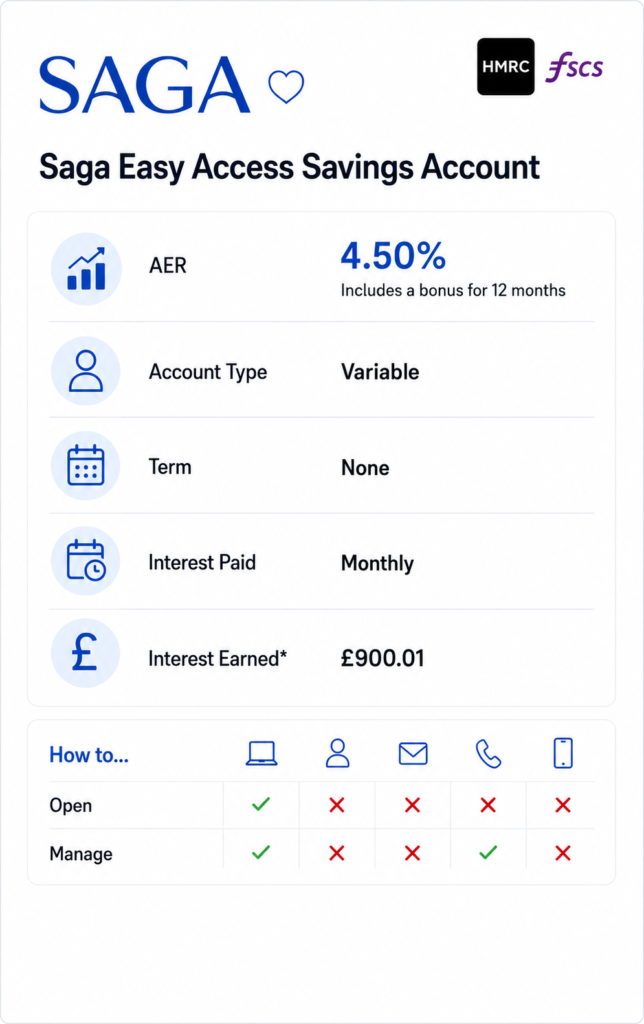
1 Year Fixed Rate Bonds
18 Month Fixed Rate Bonds
2 Year Fixed Rate Bonds
3 Year Fixed Rate Bonds
5 Year Fixed Rate Bonds
Types of Monthly Interest Savings Accounts
- Short-Term Bonds (1 to 2 Years): These are ideal if you want a guaranteed return but expect market interest rates to rise soon. They give you quicker access to your cash at maturity, though they often pay slightly lower rates than longer-term options.
- Medium-Term Bonds (3 Years): These provide a balanced middle ground, locking in a competitive yield for a moderate period without committing your money for too long.
- Long-Term Bonds (5+ Years): These traditionally offer the absolute highest interest rates on the market. They are best suited for money you are certain you will not need, as they heavily penalise early access.
- Traditional Bank & Building Society Bonds: These are standard commercial savings products. While highly competitive, any interest earned counts toward your annual Personal Savings Allowance and may be subject to income tax.
- Fixed-Rate ISAs (Cash ISAs): These tax-free wrappers ensure that 100% of your earned interest remains completely immune to income tax, regardless of how much your money grows.
- Government Bonds (NS&I / Gilts): Issued directly by the state, these offer the ultimate tier of financial security. National Savings and Investments (NS&I) frequently offers fixed-term growth bonds backed fully by the UK Treasury.
We know that your time is just as valuable as your savings, so we have answered the most frequently asked questions as simple and clear as possible. Take a look below to find the exact information you need to move forward with complete confidence:
- What is a fixed rate bond and how does it work?
- What is the difference between a fixed rate bond and a fixed rate ISA?
- Can I withdraw my money early if there is an emergency?
- Are fixed rate bonds safe? What happens if the bank goes bust?
- Do I have to pay tax on the interest I earn?
- Can I add more money to my bond after it is open?
- How long do fixed rate bonds last? Which term length is best?
- When and how is the interest actually paid?
- What happens when my fixed rate bond reaches its end date (maturity)?
- Can I open a fixed rate bond in joint names?
- What is the difference between AER and Gross interest rates?
- Are there any hidden fees or charges with fixed rate bonds?
- What is a “Fixed Rate Bond Laddering” strategy?
- Can the bank change my interest rate if the economy crashes?
- How do I find and open the best fixed-rate bond?
What is a fixed rate bond and how does it work?
- The Deposit: You provide a lump sum of cash upfront.
- The Promise: The bank promises to pay you an exact percentage of interest that will never change.
- The Term: You promise to leave your money untouched in the account for a fixed length of time, such as one, two, three, or five years.
Suppose you deposit £10,000 into a 1 year fixed rate bond offering a 4.50% AER (Annual Equivalent Rate).
- The day you open the account, your interest rate is locked.
- Even if the Bank of England drastically slashes interest rates across the country a week later, your rate remains completely unaffected.
- Exactly 12 months later, the bond reaches “maturity” (its end date). You receive your original £10,000 back, plus exactly £450 in interest.
What is the difference between a fixed rate bond and a fixed rate ISA?
- Taxation: Interest is taxable and subject to your Personal Savings Allowance.
- Deposit Limits: Virtually unlimited deposits are permitted, often up to £1 million or more.
- Withdrawal Rules: Early withdrawals are rarely allowed under any circumstances.
Fixed-Rate ISA
- Taxation: Interest is 100% tax-free, regardless of how much you earn.
- Deposit Limits: Capped at the strict annual ISA allowance, which is currently £20,000 per year.
- Withdrawal Rules: Early withdrawals are allowed but carry severe interest penalties.
Choosing between them depends entirely on your personal tax position. If you have already used up your annual £20,000 ISA allowance, or if you do not earn enough interest to exceed your Personal Savings Allowance, standard fixed-rate bonds are highly attractive because they historically offer slightly higher interest rates than their ISA equivalents.
Can I withdraw my money early if there is an emergency?
- The Strict General Rule: Most providers do not allow early closures or partial withdrawals under any circumstances. The money is legally locked in.
- The Rare Exceptions: A small number of providers do allow you to close the account early in an emergency, but they will levy a heavy financial penalty. This is often called an Early Withdrawal Charge.
- How Penalties Work: The penalty is usually calculated as a set number of days’ interest. For instance, a 2 year bond might charge a 180 day interest penalty for early closure. If you close the account near the start of the term, this penalty could even eat into your original deposit.
- Compassionate Grounds: Almost all UK financial institutions will break the lock and release the funds with zero penalties in extreme, tragic circumstances, such as the account holder passing away or being diagnosed with a terminal illness.
Because access is so restricted, you should never put your essential emergency fund into a fixed rate bond. Keep your emergency cash in an easy access account, and only use fixed bonds for money you are certain you will not need.
Are fixed rate bonds safe? What happens if the bank goes bust?
- The Protection Limit: If your bank or building society goes bankrupt, the FSCS automatically reimburses you for your losses up to £120,000 per person, per banking licence.
- Joint Accounts: If you open a joint bond with a partner, the protection doubles, covering a total of up to £240,000 within that institution.
- The Banking Licence Catch: You must look out for banks that share a single banking licence. For example, multiple different high-street brands might actually operate under the same corporate umbrella. If you have £120,000 with one brand and £50,000 with another brand that shares the same licence, your total protection across both accounts is still capped at £120,000, leaving £50,000 unprotected.
To keep your cash perfectly safe, check that your provider is officially registered with the FCA Register and ensure your total savings balance with any single banking group stays below the statutory £120,000 threshold.
Do I have to pay tax on the interest I earn?
- Basic Rate Taxpayers (20%): You can earn up to £1,000 in savings interest per tax year completely tax-free.
- Higher Rate Taxpayers (40%): Your tax-free limit drops, allowing you to earn up to £500 in savings interest per tax year tax-free.
- Additional Rate Taxpayers (45%): You do not receive a Personal Savings Allowance. Every penny of interest you earn is taxable at your highest marginal rate.
The Fixed-Bond Tax Trap:
Can I add more money to my bond after it is open?
- The Funding Window: When you open a fixed-rate bond, providers typically give you a narrow “funding window”—usually between 7 to 14 days from the account opening date—to transfer your cash into the account.
- The Dead End: Once that brief initial funding window closes, the account is completely locked down. You cannot add regular monthly savings, nor can you top it up later if you happen to inherit or save more money.
- The Alternative Strategy: If you find yourself with extra cash later on, you cannot add it to your existing bond. Instead, you will have to open a brand-new, entirely separate fixed-rate bond at whatever interest rates are available on the market at that specific time
How long do fixed-rate bonds last? Which term length is best?
- Typical Use Case: Short-term cash parking.
- Main Benefit: Quick turnaround; money is not locked away for long.
Medium-Term Bonds (2 to 3 Years)
- Typical Use Case: Mid-range future plans (e.g., saving for a car).
- Main Benefit: Balances good returns with an acceptable commitment timeframe.
Long-Term Bonds (5 Years)
- Typical Use Case: Maximising long-term returns.
- Main Benefit: Historically provides the highest yields on the market.
- If you think the Bank of England is going to cut rates soon, locking in a long-term 5-year bond is a brilliant move because it preserves today’s high yields far into the future.
- Conversely, if you think interest rates are going to shoot upward, you should stick to a shorter 1-year bond so your money is freed up quickly, allowing you to reinvest at higher rates when it matures
When and how is the interest actually paid?
- Annual Interest (Compounding): Interest is calculated once a year and added directly to your bond balance. The following year, you earn interest on top of your previous interest. This process is known as compounding, and it ensures your savings grow at the fastest possible rate over multiple years.
- Monthly Interest (Income Generation): Interest is calculated monthly and paid out entirely separate from the bond, usually being transferred automatically into your standard current account.
What happens when my fixed rate bond reaches its end date (maturity)?
- The Notification: Roughly 2 to 4 weeks before the maturity date, your bank is legally required to send you a letter or email warning you that your bond is ending.
- Your Options: They will provide you with clear choices:
- Cash Out: Have your original deposit plus all earned interest transferred directly back into your everyday high-street current account.
- Roll Over: Reinvest the entire lump sum into a new fixed-rate bond based on the current rates they are offering at that moment.
- Split: Withdraw a portion of the cash to spend and roll over the remainder into a new savings product.
The Default Trap:
If you fail to respond or forget to give them instructions before the deadline, the bank will automatically move your cash into a “Maturity Maturity Account” or a default easy-access holding account.
These default accounts notoriously pay terrible, near-zero interest rates. Always mark your maturity date clearly in your calendar to prevent your cash from losing value against inflation.
Can I open a fixed-rate bond in joint names?
- Shared Control: Both individuals named on the account legally own 100% of the funds. Neither person can claim the money is solely theirs.
- Tax Splitting: For tax purposes, HMRC assumes that any interest earned by a joint account is split exactly 50/50 between the two account holders. If one partner is a higher rate taxpayer and the other is a non earner, opening a joint account can sometimes trigger an unnecessary tax bill for the higher earner. In that specific scenario, it is often more tax efficient to open the bond solely in the name of the partner with the lower income.
- Double FSCS Safety: As noted previously, holding a joint account automatically expands your Financial Services Compensation Scheme safety net up to £170,000 for that provider, giving you extra peace of mind for larger household savings
What is the difference between AER and Gross interest rates?
- Gross Interest: This is the raw, flat percentage rate of interest the bank pays you on your balance before any deductions for income tax are made. It does not take into account how often interest is paid out or compounded throughout the year.
- AER (Annual Equivalent Rate): This is a standardised regulatory formula that shows you what your total interest rate would be if the interest was paid out exactly once a year and allowed to compound on itself.
AER is the ultimate comparison tool because it levels the playing field. It allows you to accurately compare a bond that pays interest monthly against a bond that pays interest annually. When shopping around, always use the AER figure to determine which product will genuinely yield the most cash by the end of the term.
Are there any hidden fees or charges with fixed-rate bonds?
- Zero Setup Fees: You will never be charged a fee to open a bond.
- Zero Maintenance Fees: The bank does not deduct monthly or annual administration charges from your balance. 100% of your deposited money goes entirely toward earning interest.
- The Penalty Exception: The only “hidden” cost associated with fixed bonds is the financial penalty applied if you break the contract and withdraw your cash early. As long as you leave your money completely untouched until the official maturity date, you will never face a fee or charge of any kind
What is a “Fixed Rate Bond Laddering” strategy?
- Year 1: Deposit £10,000 into a 1-year bond.
- Year 2: Deposit £10,000 into a 2-year bond.
- Year 3: Deposit £10,000 into a 3-year bond.
- Year 4: Deposit £10,000 into a 4-year bond.
- Year 5: Deposit £10,000 into a 5-year bond.
Under this system, you get the best of both worlds: every single year, one of your £10,000 bonds will mature, giving you regular, predictable access to penalty-free cash. If you don’t need the cash when a bond matures, you simply reinvest it into a new 5-year bond. Within a few years, you will have a rolling system where you enjoy the ultra high interest rates of a 5-year bond, but with the added flexibility of having substantial cash unlocked every 12 months.
Can the bank change my interest rate if the economy crashes?
- If the base rate plummets to zero, your bank is legally forced to honor your original high fixed-rate contract until the exact day your bond matures.
- The Downside Shield: This protection cuts both ways. If the economy booms and interest rates across the high street skyrocket to 8%, your money remains locked in at your original lower rate. You cannot close the account to chase higher rates elsewhere. This is the fundamental compromise of a fixed-rate bond: absolute certainty in exchange for total inflexibility.
How do I find and open the best fixed-rate bond?
- Search HERE: Never simply accept the fixed rate offered by your current high-street bank. We list the absolute highest AER currently available on the market.
- Verify FSCS Protection: All our providers listed above are fully regulated and backed by the Financial Services Compensation Scheme.
- Check the Minimum Deposit: Look at the entry requirements. Some bonds can be opened with as little as £1, while others require a strict minimum initial deposit of £1,000 or £5,000.
- Apply Online: Follow the link to fill out a quick application form with your name, address, National Insurance number, and your standard UK bank account details (your “nominated account”).
- Transfer Funds: Transfer your lump sum deposit within the initial funding window via online banking or a debit card payment. Once the transfer is complete, sit back, relax, and watch your guaranteed interest pile up until maturity!
Summary Checklist for Fixed Rate Bonds
- Guaranteed Financial Returns: Fixed-rate bonds are secure UK savings accounts that lock in a specific interest rate for a set period (typically six months to five years), ensuring your money grows predictably regardless of wider economic shifts.
- Strict Withdrawal Rules: Savers must deposit a lump sum upfront during a brief initial funding window; after this, funds are completely inaccessible until the bond reaches its maturity date, with early access rarely permitted outside of exceptional compassionate grounds.
- Robust Safety Net: Capital is highly secure because money held with authorised UK banks or building societies is fully protected by the government-backed Financial Services Compensation Scheme (FSCS) up to £120,000 per person, per banking licence.
- Tax Considerations: Interest earned is subject to income tax but can be offset by your annual Personal Savings Allowance (£1,000 for basic-rate and £500 for higher-rate taxpayers); however, long-term bonds that pay accumulated interest at maturity can inadvertently trigger a tax bill in that single financial year.
- Maximising Value: To balance high returns with liquidity, savers often use an intelligent “bond laddering” strategy—splitting their lump sum across multiple bonds with staggered maturity dates—enabling regular, penalty-free access to a portion of their cash every year.
Alternative accounts: If a Fixed Rate Bond account isn’t right for you, consider these other account types:
Easy-access savings accounts provide a secure, flexible way to earn interest on your cash with total freedom. Since you can withdraw your money instantly without penalties, your funds remain completely available whenever you need them. This flexibility makes them an ideal choice for building an emergency fund or holding short-term cash. We search 100’s of providers to find you the highest interest rates available on the market.
Regular savings accounts offer a structured, rewarding way to build your cash. By committing to save a set amount each month, you unlock some of the highest interest rates available. This predictable routine helps you grow your money consistently while protecting it from volatile markets. It is an ideal choice for building an emergency fund. We compare the full market so you always get the best rates available.
Notice savings accounts pay higher interest if you give advance warning before taking your money out. You can pick the timeline that fits your plans, with flexible 30 day or 60 day accounts, medium-term 90 day options, or top-earning 120 day and 180 day periods. It is a great way to grow your money safely without locking it away forever. We scan every option on the market to bring you the best possible returns.
Children’s savings accounts offer boosted interest rates to jumpstart your child’s financial future. You can select the account type that matches your family’s milestones, from flexible instant access accounts to high growth fixed rate bonds. It is a secure was to build a nest egg while teaching your kids lifelong money habits. We scan the entire market to find the highest available rates for your child’s savings.
Monthly Interest Savings Accounts
Monthly interest savings accounts provide a dependable, regular stream of extra income from your cash. Instead of waiting until the end of the year, your interest is paid out every single month. This frequent payout structure makes them an ideal choice for anyone looking to supplement their monthly budget or pension. We compare the complete market to unlock the best rates for your savings.